


NEWS
10 Lessons on Business Value of Technology From WEBCON DAY 2026
How do you implement AI effectively? How do you scale solutions into new markets? Why can a seemingly simple process turn into a complicated implementation, and how do you plan the work so you deliver both a solution and business value? Experts discussed technology trends and the challenges organizations face at the 12th WEBCON DAY, held on October 15, 2026. Here are the ten biggest takeaways from their talks.
Every speaker on the WEBCON DAY 2026 stage came from a different industry. Still, one idea kept coming up: technology alone, even the best technology, isn’t enough. Many other factors now decide whether an implementation succeeds.
1. Technology alone doesn’t create business value. Value comes from solving a specific problem with it
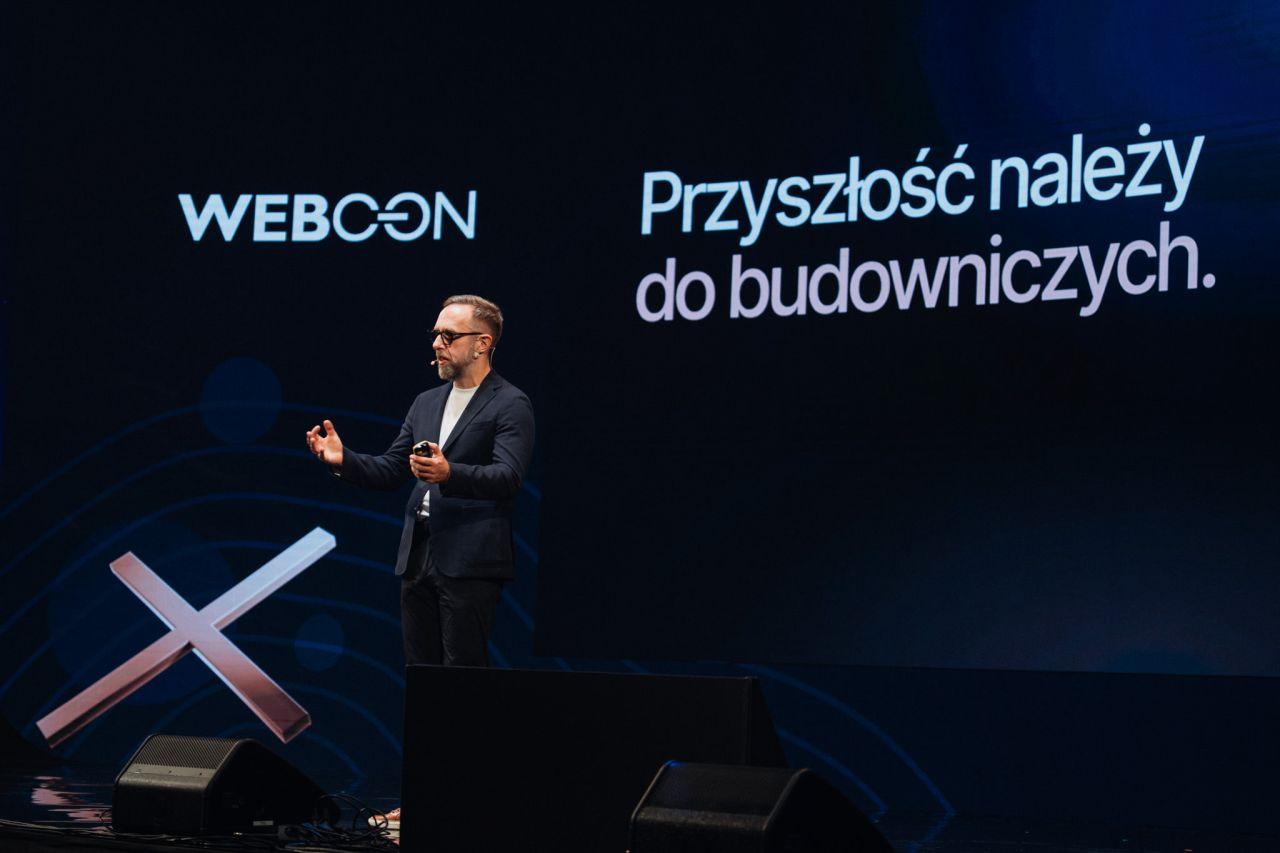
AI models keep getting better, but that doesn’t automatically translate into measurable benefits for the organizations that adopt them. McKinsey’s “The State of AI” report found that 63% of companies see no measurable impact from AI on their results¹. As Michał Potoczek, CEO of WEBCON, pointed out, a gap still separates what technology can do from what it delivers for business. Handing employees more tools won’t close it. Why? A quick fix isn’t a process transformation. If your data sits scattered across systems and inboxes, AI runs into the same walls people hit before it showed up.
The real challenges lie elsewhere. Cloudera’s² research shows that 80% of companies say limited data access is slowing their AI development. When information stays scattered across systems and email, AI runs into the same barriers people struggled with just moments before.

KEY TAKEAWAYS
✅Judge technology by the problems it solves, not just by what it can do.
✅Start with clean data and a defined workflow. Only then will a new tool create real business value.
2. Interdependence is unavoidable. Manage it on purpose
On June 12, 2026, the U.S. government ordered Anthropic to block access to two of its newest LLMs, Claude Fable 5 and Mythos 5³. That put technology and data sovereignty at the top of the agenda for boards, especially at European companies. AI adoption is no longer just an organizational challenge of preparing processes and gathering information. It’s also about building resilience.
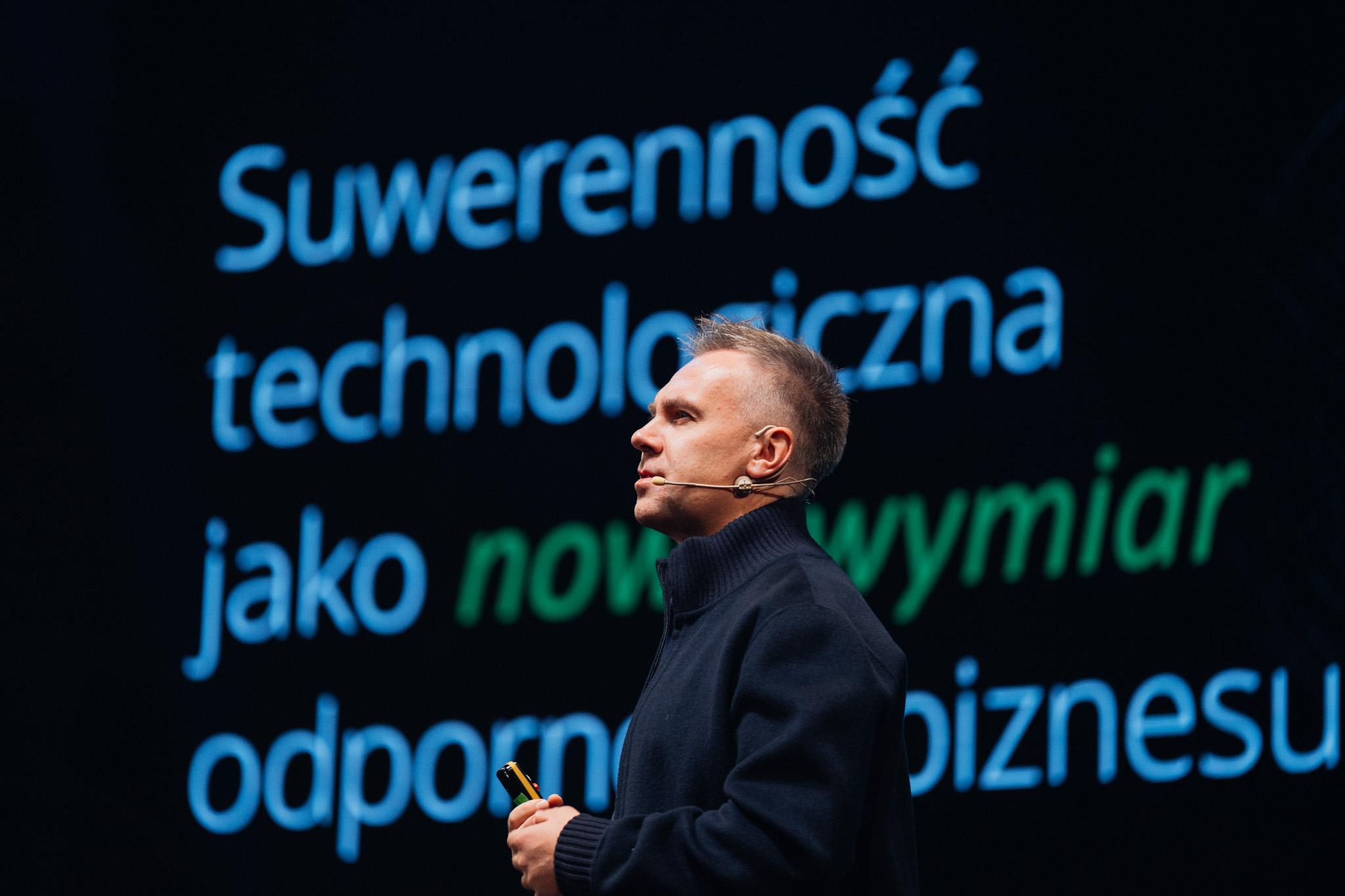
As Michał Pieprzny, President of the Management Board at Deloitte Consulting Poland, explained in his session, sovereignty doesn’t have to mean owning your own infrastructure, models, or other parts of the solution. In a world of connected systems and services, full self-sufficiency is nearly impossible. And certainly not easy.
So interdependence is unavoidable. To keep it from weakening your organization, know which factors your business depends on and the rules that govern your work with each vendor.
KEY TAKEAWAYS
✅Interdependence is unavoidable, but that doesn’t mean you can’t build resilience.
✅Resilience comes from knowing your dependencies, being clear about how things work, and having ready alternatives before you need them.
3. AI adoption is built on transparency and control
AI agents are becoming more autonomous. That doesn’t remove the need for oversight. If anything, the more work you hand to technology, the more important it is to understand how it works.
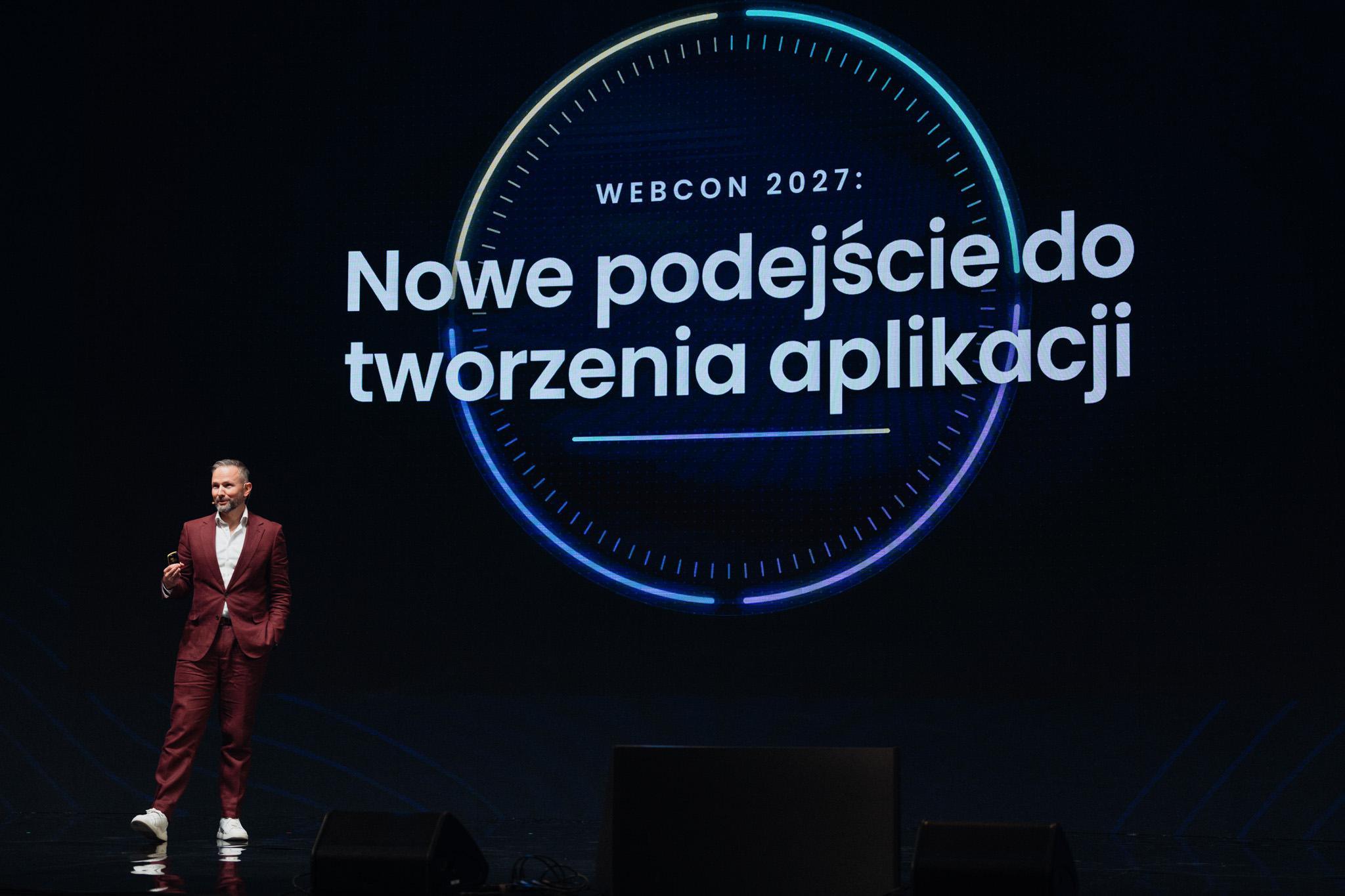
WEBCON builds its platform around the latest technology trends, but mainly around what organizations actually need. Using AI safely and in a controlled way is a top priority for companies today, and it’s also how you build adoption. In the product session, the WEBCON team showed how the platform lets you bring agents into processes transparently, measure their results, and scale to other processes. The presentation was led by Łukasz Wróbel, CBDO at WEBCON, Adrian Baszak, Business Analyst, Jakub Ochnio, VP of Pre-Sales, Łukasz Świszcz, VP of Technology, and Paweł Grzegorczyk, VP of Growth at WEBCON.
KEY TAKEAWAYS
✅An AI agent needs a clear scope, access to the right data, and a defined role in the process.
✅Trust grows when users can see how AI works, influence its outputs, and review what it did. In short, they can see the real benefit.
4. AI should speed up building apps, not complicate their future
Vibe coding is catching on fast. But how quickly you generate a first version is only part of the story. In an organization, a solution will almost certainly get changed, integrated with other systems, and maintained later, often for years. That’s why the product session also stressed keeping configurations understandable and easy to edit.
KEY TAKEAWAY
✅AI that supports app development makes the process faster. But beyond a quick start, what matters is the ability to keep developing what you built safely.
5. One cross-functional team can achieve far more than three separate teams passing work back and forth
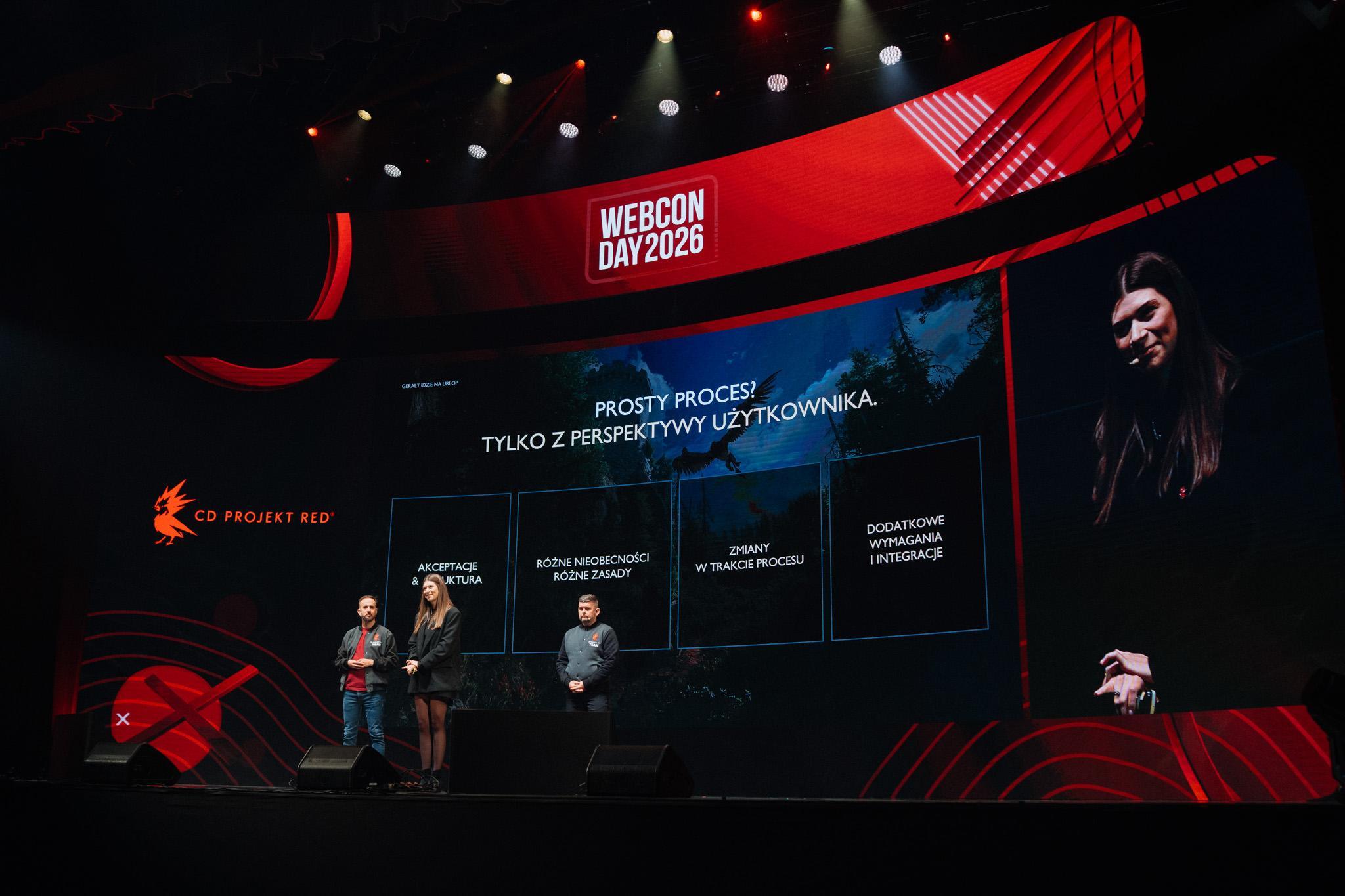
For years, experts have recommended starting a transformation with a simple process, and HR processes often top the list. Vacation requests seem simple, until you factor in contract types, limits, org structures, and approval paths. At CD PROJEKT RED, new dependencies kept surfacing as the team built the application.
On the WEBCON DAY 2026 stage, Jakub Sochacki, Business Systems Manager, Michał Wawrzonkowski, Business Systems Coordinator, and Weronika Modzelewska-Ochman, Employment & Payroll Lead at CD PROJEKT RED, shared how they tackled that project.
At first, the business, the internal IT team, and the platform vendor worked separately. Each side knew only part of the requirements, and assumptions filled the gaps. That setup didn’t deliver the results they needed.
The turning point? Forming one team and working together every day in a fusion team model.
KEY TAKEAWAY
✅In a complex implementation, figure out the solution together from the start rather than checking at the end whether everyone understood it the same way. A fusion team gathers requirements effectively, reacts quickly to new needs and changes, and delivers a solution that works in practice.
6. Your solution doesn’t have to be perfect to deliver value
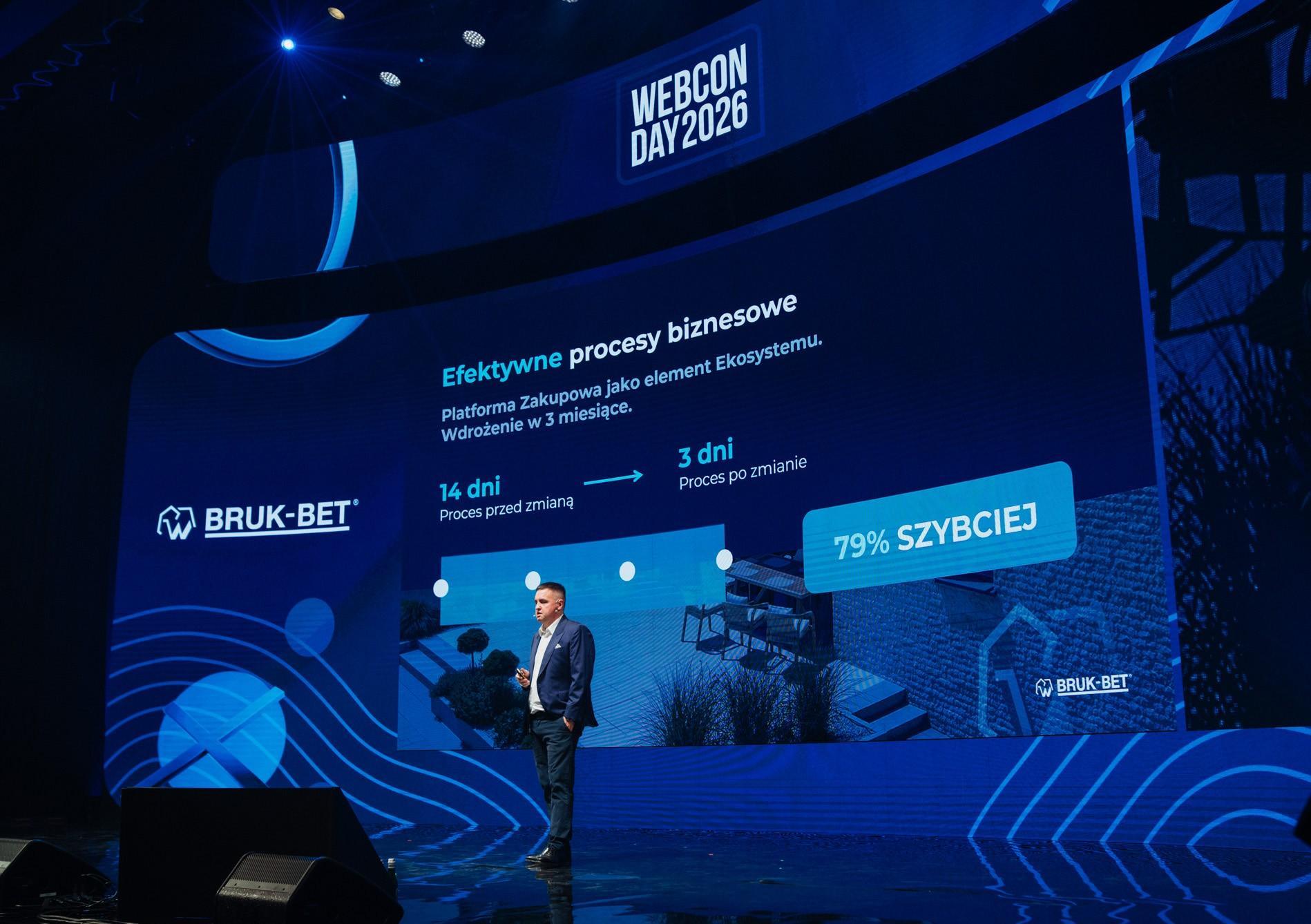
Shipping visible improvements regularly is the recipe for transformation success. Paweł Górka, IT Director at Bruk-Bet, shared how his company rolled out 70 process applications in just 18 months. That pace came not only from technology or smooth collaboration between business and IT, but also from a practical approach to implementation.
Paweł Górka argued that a launch doesn’t have to wait for the perfect version. If an app already delivers business value in its current form, get it into users’ hands. Then plan the next steps based on real usage and new needs.
KEY TAKEAWAY
✅In transformation, speed, responsiveness to real user needs, and improvement of the whole process matter more than the perfection of any single app.
7. Transformation should follow strategy, not pressure to chase trends
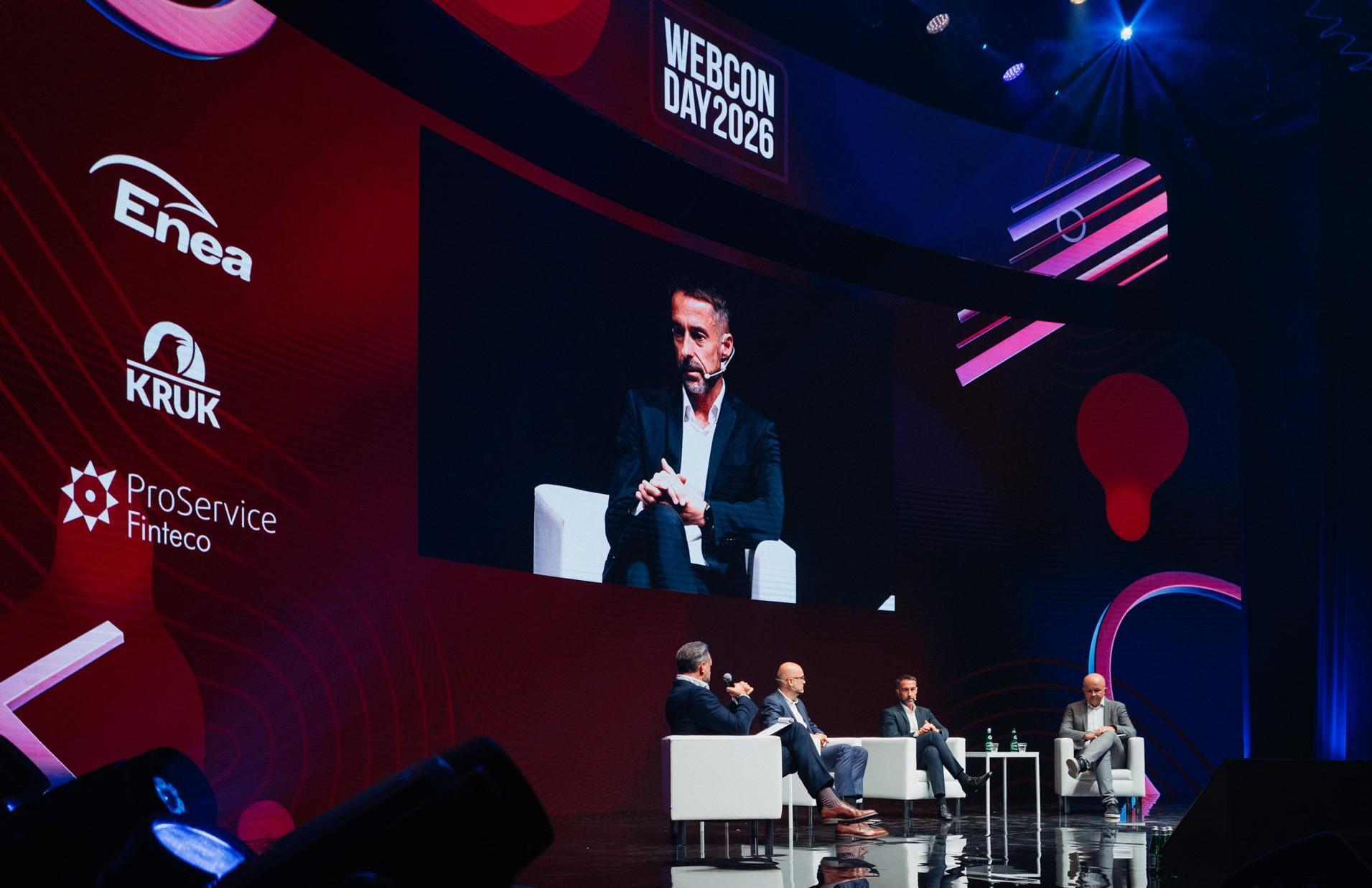
The fact that other companies invest in a given technology isn’t a good reason to do the same. Start with questions about where the organization is heading, how competitive it is, and how it will operate in the long run. This was a core thesis shared by Sebastian Gajecki, Member of the Management Board for IT at Enea Centrum, Adam Łodygowski, Chief Data & Technology Officer at KRUK Group, and Robert Pławiak, CTO at ProService Finteco, during the panel “Stop planning for certainty. Start building for change.”
Don’t start a transformation by asking what technology others are deploying. First, define what kind of organization you want to be, how you want to build a competitive edge, and what’s holding you back today. The panel shared concrete examples: operational excellence as a pillar of strategy, consolidating scattered tools, and rebuilding processes to stay competitive for years to come. In these stories, technology was a means to an end, not the end itself.
KEY TAKEAWAYS
✅Start your transformation by answering 3 questions. What kind of organization do we want to be? How will we build competitiveness? What’s holding back these ambitions today?
✅Don’t ignore trends, but before adopting one, assess which ones actually matter for your business.
8. People, processes, technology. Keep the right order
A new tool won’t fix a process that no longer meets a real need. It also won’t replace employees’ readiness to change how they work. So a transformation conversation should cover more than technology selection. It should also examine why existing procedures exist, the terms of collaboration, and what users actually need. The panelists in “Stop planning for certainty. Start building for change” reached the same conclusion.
In transformation, especially with fast-moving technologies like AI, a safe space to experiment is essential. That means designing new ways of working, finding the right tools, preparing people for change, and giving them room to learn. If every mistake gets punished, the organization limits its own learning. What helps instead is a shared goal for business and IT, rather than two separate task lists. As Adam Łodygowski pointed out, shared accountability for the same outcome drives collaboration and a healthy exchange of skills. The goal isn’t for each side to finish its own piece. It’s for the team to deliver the results together.
KEY TAKEAWAYS
✅People, processes, and technology. This order matters. Deploying a tool alone won’t change how people think, and it won’t confirm that a process still solves a real problem.
✅Experimentation requires psychological safety. If mistakes get punished, the organization blocks its own path to new ideas.
✅Business and IT need one goal. Shared accountability for results forces collaboration and builds understanding of both perspectives.
9. Go-live is where you start measuring benefits, not where the project ends
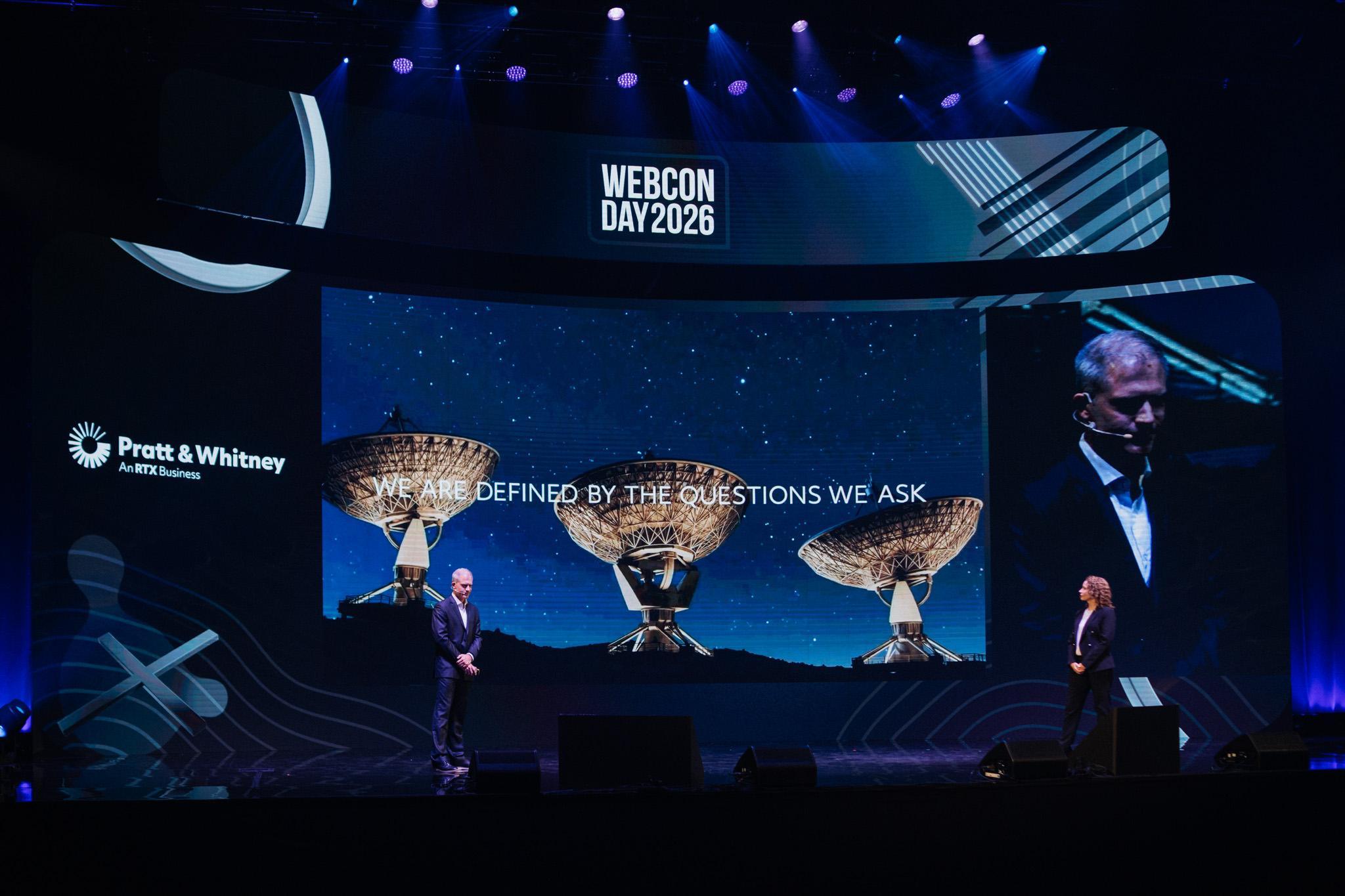
Savings listed in a business case stay assumptions until you confirm them in practice. Jocelyn Brulé, Associate Director at Pratt & Whitney Canada, described how his team monitors new workflows. Three months after launch, they go back to users to verify the time savings they predicted.
Natalia Lampart-Bukała, Business Process Automation Manager at Pratt & Whitney Polska, added that applications should evolve alongside the processes they support. New needs emerge over time, and other systems take over some tasks. That’s why you should choose technologies that let you build a solution quickly and adjust it later. This matters when business needs shift, and it matters when you act on feedback. A small change to a label, a button, or a form layout may seem minor, but it tells employees the solution was built for them. This openness to change and continuous improvement also makes scaling easier. Proven apps and good user experiences in one country encourage rollout to other locations. For enterprise organizations, that matters a lot.
KEY TAKEAWAYS
✅Measuring results raises the value of an implementation and builds trust in the IT department across the organization.
✅Don’t treat go-live as the finish line. Ongoing development matters just as much. The solution should keep up with process changes and user needs.
10. Want to stay flexible? Design for it upfront
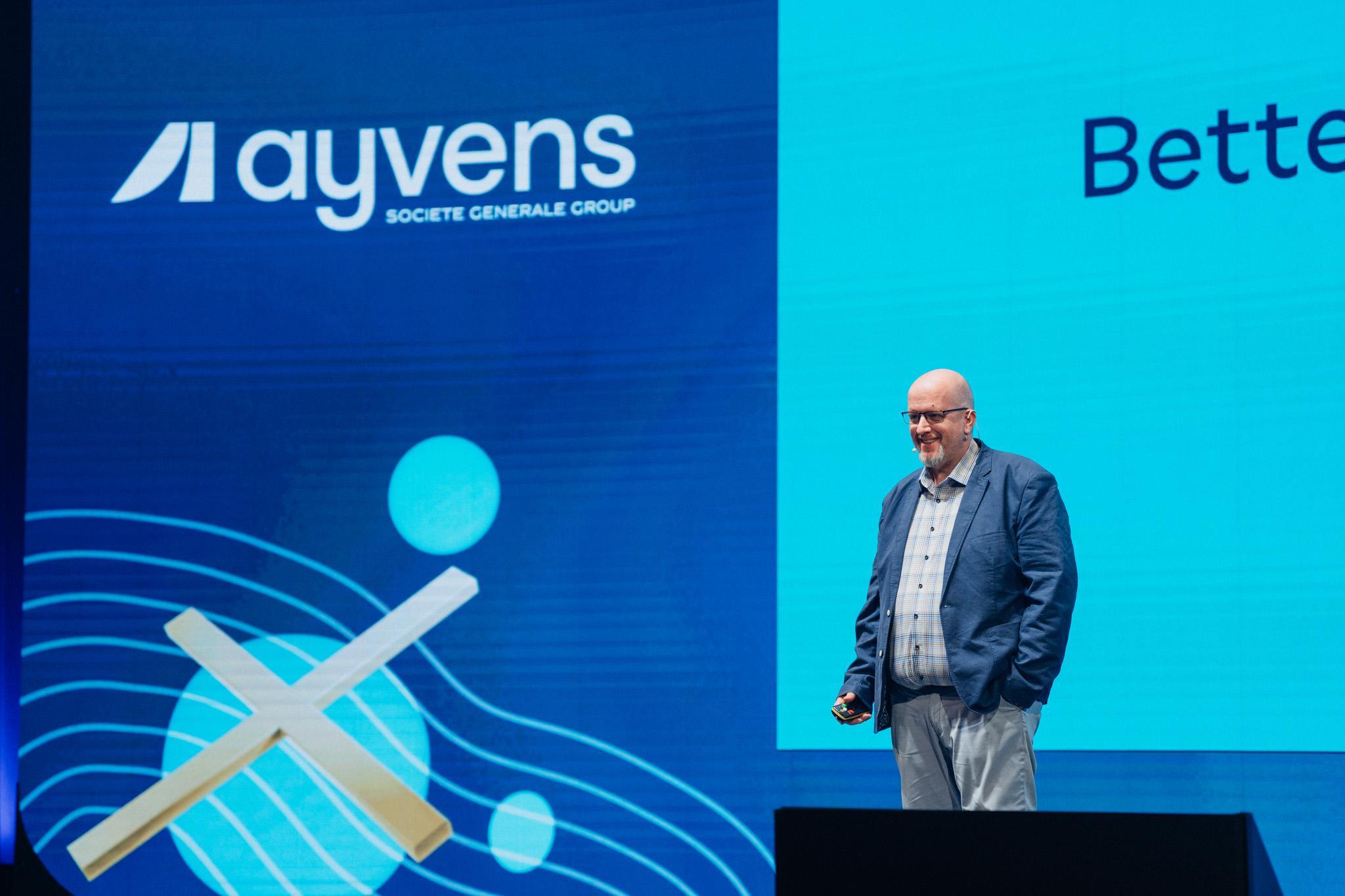
Scaling to new markets shouldn’t mean starting from scratch. Ayvens’ experience shows that a common standard can coexist with local requirements, as long as the solution accounts for those differences from the start.
Simon Péter, Manager of BPM Solutions, explained how Ayvens approaches scaling during his session. To build tools that can scale to new markets, you need to plan for it early. He also presented his recipe: a shared core process ready for multiple languages, adaptable to local regulations, and aligned with the rules for working with service and data providers. Key requirements? A flexible integration design and a deliberate decision about what must stay standard across every implementation.
KEY TAKEAWAY
✅Flexibility doesn’t mean piling up exceptions. It means designing a way to handle them.
WEBCON DAY 2026 speakers pointed to many paths toward successful transformation, not one universal recipe. Still, the shared pattern is clear: start with a real need, combine business and technology skills, deliver value in stages, and measure the results. Technology keeps opening new possibilities. Which ones become a competitive advantage depends on how an organization uses them.
Sources:
- McKinsey, “The State of AI”, https://www.mckinsey.com/capabilities/quantumblack/our-insights/the-state-of-ai
- Cloudera, “Nearly 80% of Enterprises Say AI Is Held Back by Data Access Challenges, New Cloudera Report Finds", https://www.cloudera.com/about/news-and-blogs/press-releases/2026-04-14-nearly-80-percent-of-enterprises-say-ai-is-held-back-by-data-access-challenges-cloudera-report-finds.html
- Reuters, “Anthropic disables top-tier AI models after US order limiting foreign access”, https://www.reuters.com/technology/us-blocks-foreign-access-anthropics-most-advanced-ai-models-axios-reports-2026-06-13/